THE FOOD STORY OF KUALA LUMPUR

Where Malay, Chinese, and Indian Cultures Created Something Extraordinary

Kuala Lumpur is Malaysia's capital and the place where three distinct food cultures collided, merged, and evolved into one of the world's most exciting culinary scenes.

A CITY BUILT ON TIN, SHAPED BY FOOD

Kuala Lumpur started in the 1850s as a rough tin-mining camp at the confluence of two rivers. Within a decade, Chinese miners, Indian labourers, and Malay traders were living and working side by side — and cooking for each other. What happened next is the reason people fly here just to eat. Malay sambal got blended into Chinese noodle soups. Indian mamak stalls started serving char kway teow alongside roti canai. Nyonya cooks (the descendants of early Chinese settlers who married into Malay communities) created an entirely new cuisine that borrows from both. None of this was planned. It happened because people were hungry, curious, and living close together. The stalls we take you to are part of that same story. Aunty Lim's char kway teow technique comes from her mother, who learnt it in the 1970s. The nasi lemak spot in Chow Kit has been run by the same family for over 40 years. These aren't restaurants that opened to serve tourists — they're part of the neighbourhood. You'll eat alongside people who have been coming here their whole lives.

The Story Behind the Food

How Kuala Lumpur Became a Food Paradise

Every Malaysian city has its own food story. Kuala Lumpur's story begins with the people who built it.

In the 1800s, tin miners from southern China arrived alongside Malay villagers, Indian traders, and Peranakan families. Each brought their recipes. Each adapted to local ingredients. What emerged wasn't just "Malaysian food" — it was Kuala Lumpur's food: a collision of cultures that created something entirely new.

Today, you'll find Malay aunties making laksa with Chinese Hokkien noodles. Indian uncles serving roti canai alongside Malaysian teh tarik. Peranakan families keeping recipes that are 140 years old. This isn't fusion — it's evolution. And it's why Kuala Lumpur eats better than anywhere else.

The Four Pillars

The Food Cultures of Kuala Lumpur

Four culinary traditions. One extraordinary food scene. Here's who shaped what you'll eat.

Malay Cuisine

The indigenous foundation: aromatic herbs, coconut milk, Islamic traditions. Think nasi lemak wrapped in banana leaves, satay grilled over charcoal, rendang slow-cooked for hours. This is the food of community meals, royal courts, and eating with your hands.

Look for: Nasi Lemak, Satay, Rendang, Mee Rebus

Chinese Malaysian Cuisine

Hokkien, Cantonese, and Hakka immigrants arrived with wok techniques and family recipes. They adapted to local chilies, tropical herbs, and British colonial ingredients. The result? Char kway teow with wok hei, bak kut teh brewed with Malaysian herbs, dim sum in kopitiam settings.

Look for: Char Kway Teow, Hokkien Mee, Bak Kut Teh, Dim Sum

Indian Malaysian Cuisine

South Indian Tamil families and Indian Muslim (Mamak) communities brought banana leaf rice, roti canai, and teh tarik. The Mamak invented 24-hour restaurants. Tamil families kept the tradition of communal banana leaf meals. Both changed how Kuala Lumpur eats forever.

Look for: Roti Canai, Banana Leaf Rice, Murtabak, Teh Tarik

Peranakan (Nyonya) Cuisine

When Chinese immigrants married Malays, Peranakan culture was born. Their cuisine is the ultimate fusion: Chinese ingredients meet Malay spices, cooked with patience and precision. Laksa, ayam pongteh, kuih pie tee — these are grandmother recipes, refined over generations.

Look for: Laksa, Ayam Pongteh, Kuih Pie Tee

Why It Matters

Why Join a Food Tour?

Without a Local Guide

  • You'll eat at tourist traps on the main streets
  • Miss the stalls where locals actually eat
  • Never learn the cultural stories behind dishes
  • Leave wondering "what was that dish called?"

With Simply Enak

  • We visit family-run stalls we've known for 14+ years
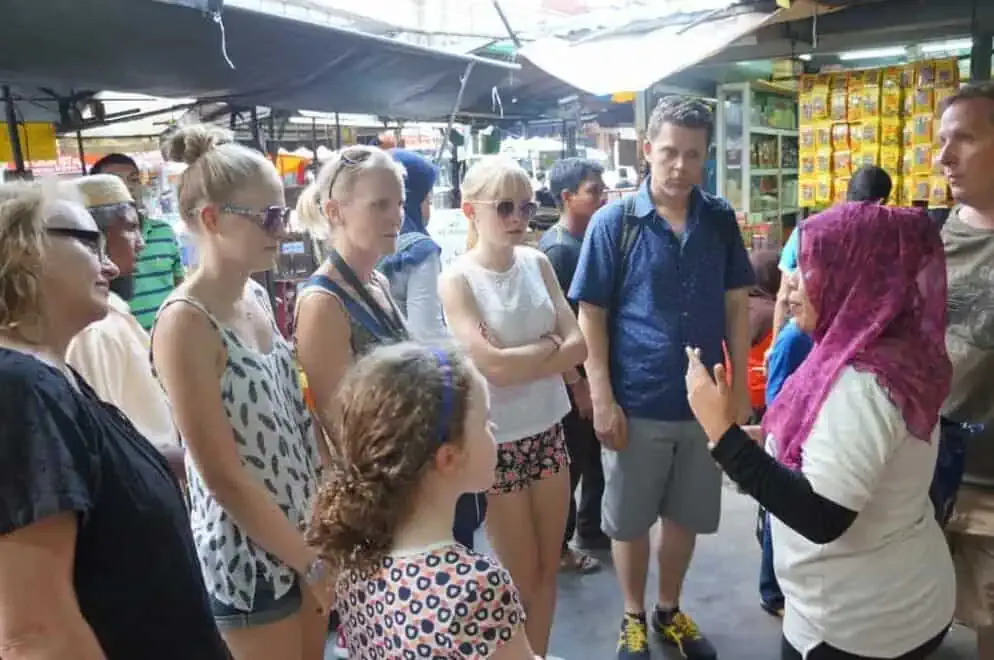
  • You'll meet vendors and hear their life stories
  • Learn the history, culture, and techniques behind every dish
  • Leave with a mental map of where to eat for the rest of your trip

Common Questions

Questions We Often Hear

What's the best time to visit Kuala Lumpur for food?

Year-round destination. Best weather: March-April, August-September. Avoid: Monsoon season (November-January).

Are your food tours suitable for vegetarians?

Yes! We offer dedicated vegetarian food tours and can adapt most tours for dietary restrictions. Just let us know when booking and we'll ensure you have plenty of delicious options.

How much walking is involved?

Our tours cover about 2-3 kilometers over 4-5 hours, with plenty of stops to eat and rest. We walk at a leisurely pace and can accommodate most fitness levels.

Do I need to book in advance?

Yes, we recommend booking at least 2-3 days in advance. Our tours are limited to 8 people to keep the experience intimate, and they often fill up 1-2 weeks ahead during peak season.

What if it rains?

Tours run rain or shine! We have covered walkways and indoor stops along the route. In case of severe weather, we'll reschedule or provide a full refund.

Practical Information

When to Visit

Year-round destination. Best weather: March-April, August-September. Avoid: Monsoon season (November-January).

Getting Around

MRT/LRT: Efficient train system. Grab: Affordable ride-sharing. Walking: Best for food tours - we cover 2-3km at leisurely pace.

What to Pack

Comfortable walking shoes, light clothing (hot and humid), umbrella (sudden rain), appetite!

Our Tours

We run food tours across Malaysia's top culinary destinations. Browse all tours to find what fits your group and dates.

Browse All Tours

Ready when you are

Let's Eat Together

Join us for your next Malaysian adventure. Small groups, real neighbourhoods, stories worth telling.

Free cancellation up to 24 hours We reply within 3 hours Max 9 people per tour
Book Your Tour